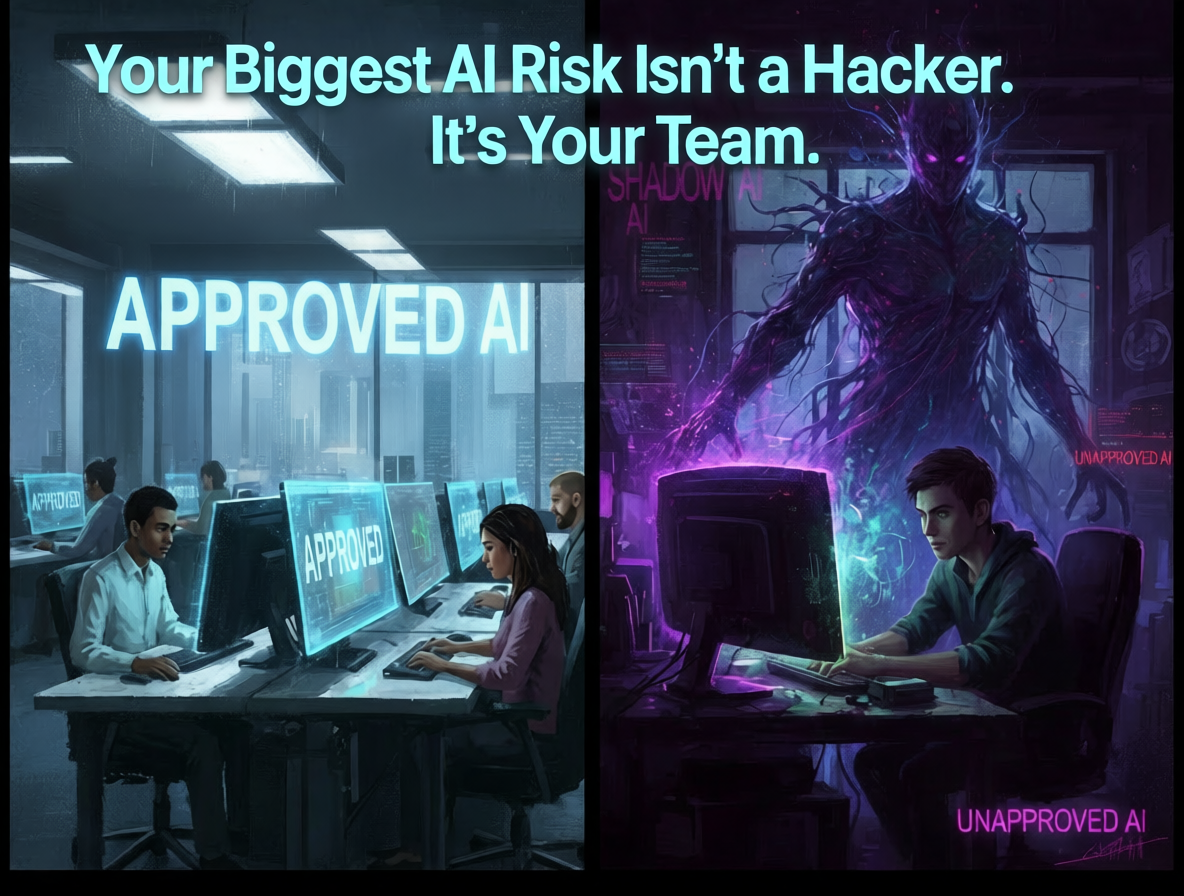
Your staff is already using AI. You probably know that. What you might not know is which tools, on which data, with what guardrails.
The 2026 Nonprofit AI Adoption Report put a number on it: 92% of nonprofits are using AI in some capacity. But 47% have no governance policy at all. And 81% are using AI individually, no shared workflows, no documentation, no organizational learning.
That's not an AI problem. That's a risk management problem hiding in plain sight.
If you run a small business, you've probably had some version of this conversation in the last six months:
"We should be doing something with AI."
Maybe your office manager started using ChatGPT for emails. Maybe a competitor posted about their "AI-powered" workflow on LinkedIn. Maybe you sat through a vendor demo that promised to "transform your operations."
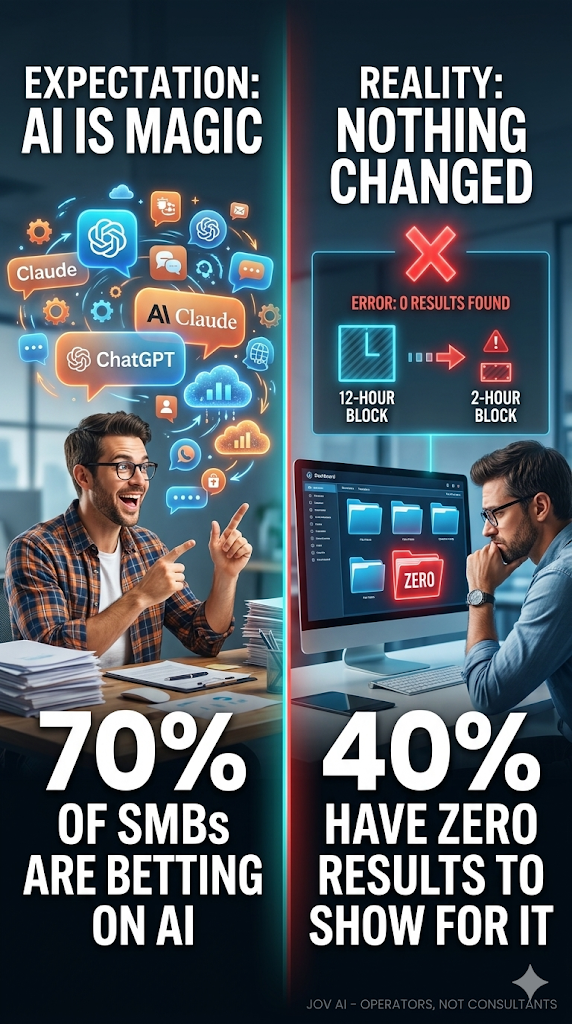
And then nothing happened. Or worse, something happened, but you can't point to what actually changed. Your AI implementation stalled before it started.
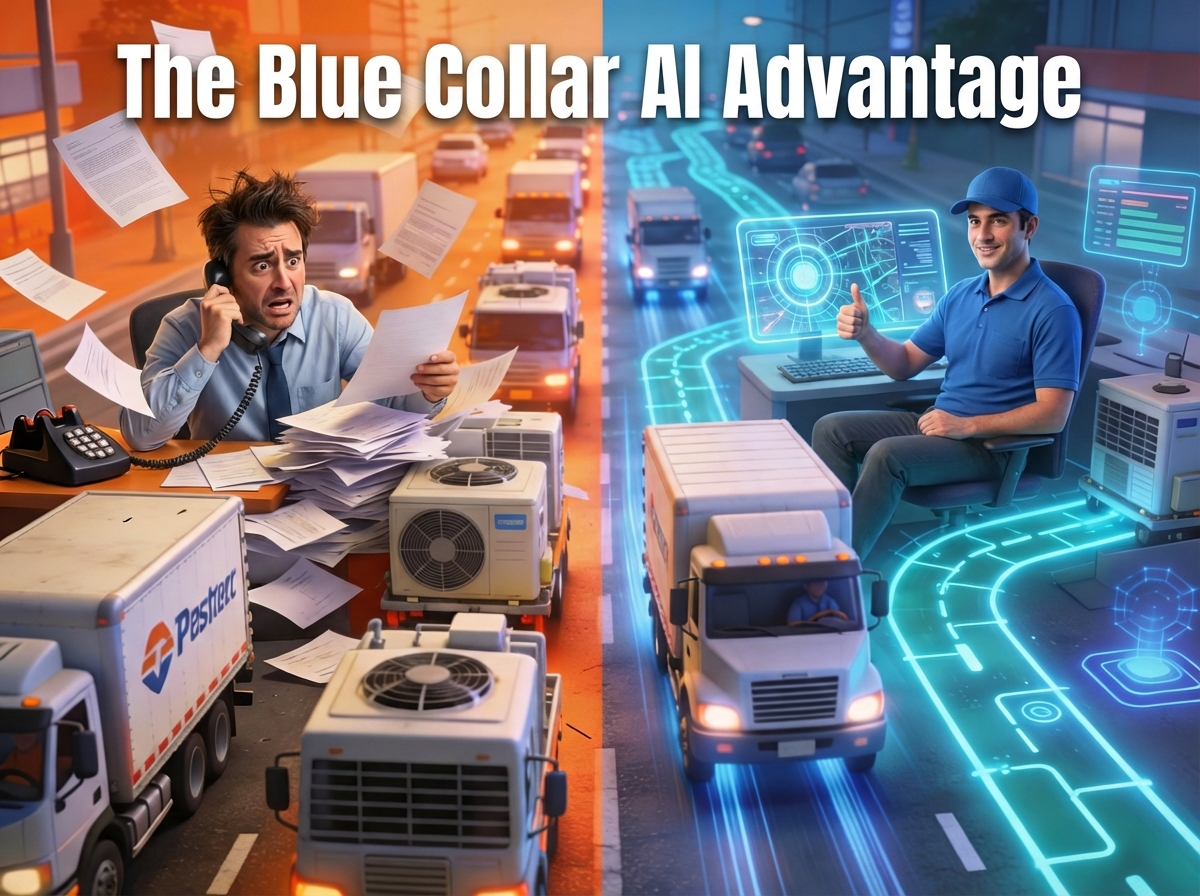
Your best tech is losing two to three hours a day to bad routing. Your estimator is rebuilding the same spreadsheet for the third time this week. Your office manager is chasing invoices instead of chasing growth.
None of that is a technology problem. It's operational drag. And it's capping how fast your business can grow.
Most trades owners assume AI isn't for them yet. That's exactly why the ones adopting it now are pulling ahead so fast. HVAC. Plumbing. Construction. Manufacturing. Field services. Where almost no one has started, even basic AI puts you a generation ahead.
If you've been on LinkedIn this week, you've seen the posts. Someone's AI agent just booked their flights, summarized their inbox, and scheduled their week—all while they slept.
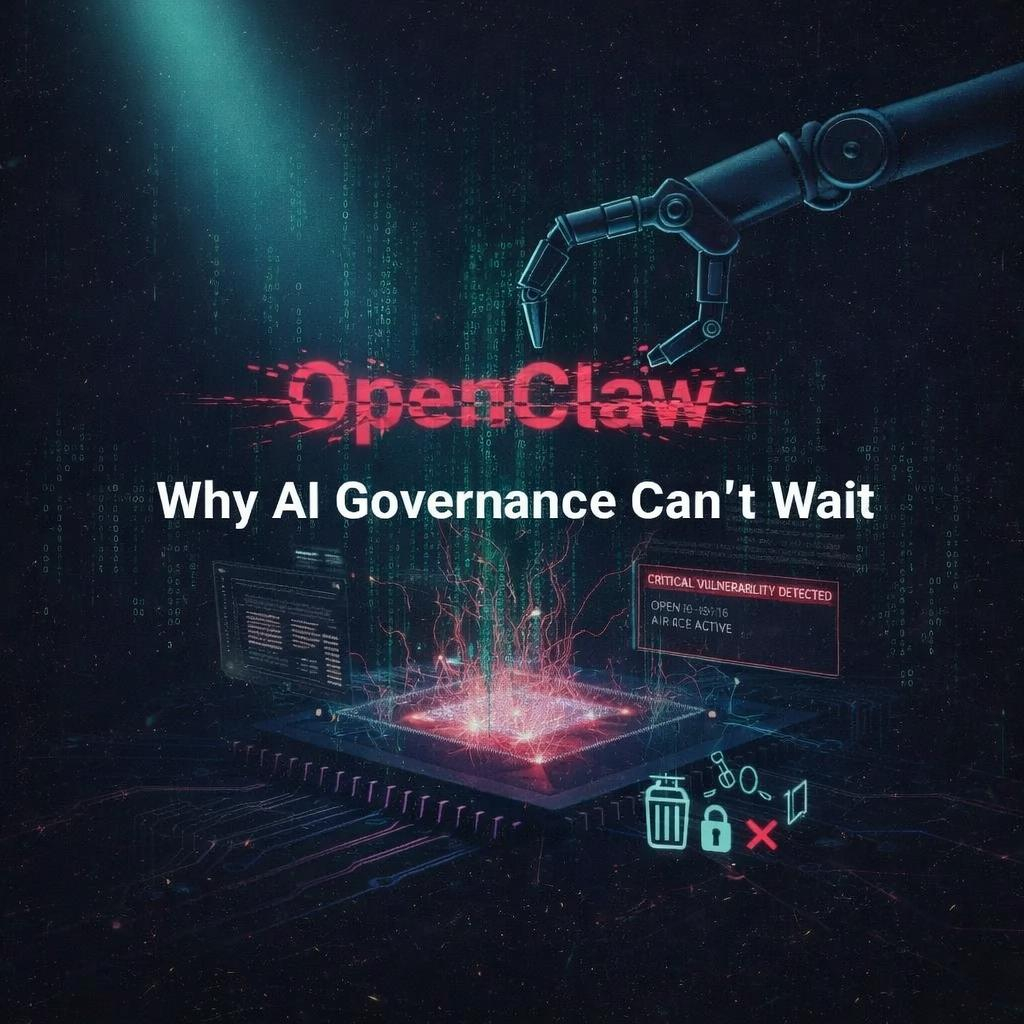
OpenClaw (formerly Clawdbot, then Moltbot) is being downloaded thousands of times a day. It's the fastest-growing AI agent in history, and it's likely already installed on a laptop in your office.
Here's the problem: this isn't a polished product from Google or Microsoft. It's an experimental tool that, once granted access, can read and write files on your computer. It can execute scripts. It can connect to your email, your calendar, your customer data. And the creator himself says the security is "a work in progress" and it's "not meant for non-technical users."
That hasn't stopped non-technical users from installing it anyway. And most of them have no AI governance in place.
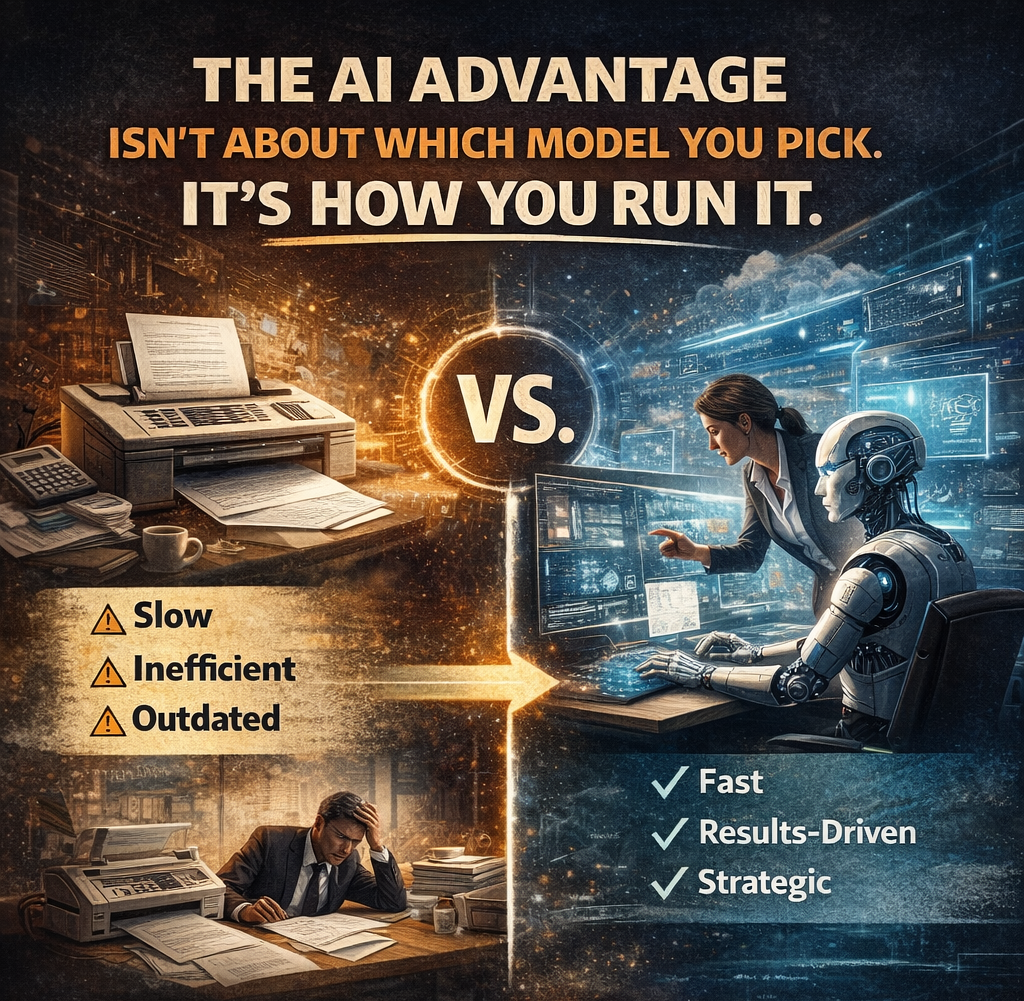
Every few months, a new AI model drops and the internet loses its mind. GPT-5-whatever. Gemini-some-number. The next thing.
It's like the iPhone when they were new—each number was a big deal. I used to get excited too. But can you honestly tell me the kid fresh out of college is getting more ROI out of a new iPhone than the business operator on one that's three years old?
Now, look at the guy who doesn't have a cell phone and is still faxing documents—how's he doing?
That's what I mean. Debating which AI model to use is like worrying about which carrier to get cell service through. Meanwhile, most business owners haven't figured out what to do with the last model.
Here's what's easy to miss in the noise: the models got good. Really good. Three years ago, AI couldn't write a decent email. Now it can draft proposals, analyze contracts, and handle first-line customer support. Small and medium-sized businesses have access to the same capabilities enterprise companies are spending millions to deploy.
So why are some businesses pulling ahead while others spin their wheels?
It's not which AI they picked. It's how they run it.
82% of enterprise decision-makers now use AI weekly. 46% use it daily. These aren't employees experimenting on the side—these are the people running things. VPs, C-suite, the ones setting strategy and making decisions. (Wharton, 2025)
Meanwhile, only about 9% of small businesses have adopted AI. (SBA, 2025) That's SBA's cut of Census data on firms reporting active AI use, not just experimentation.
That's the gap. The models are the same. You have access to the same AI enterprise leaders are using daily.
In 2022, I walked away from a 15-year career in bond trading to build AI models. I thought I knew exactly how this would play out.
I was right about the opportunity. I was wrong about the timeline.
That gap between promise and payoff is the real story, and it's the reason most small businesses still haven't figured out how to make AI work for them.
How systematically evaluating every major business tool revealed the hidden gems and costly mistakes most companies never discover
As the founder of AutomateIX working with rapidly scaling businesses, I've witnessed the same painful pattern dozens of times: companies burning through thousands of dollars monthly on tool subscriptions while their teams remain frustrated, inefficient, and drowning in disconnected workflows.
The problem isn't a lack of tools—it's the opposite. With over 30,000 SaaS tools available today, the paradox of choice has created a new form of organizational paralysis. Teams spend more time evaluating, switching, and managing tools than actually using them to drive results.
That's why I embarked on what might be the most comprehensive tool evaluation project ever attempted by a single organization. Over the past 18 months, I've systematically evaluated 250+ tools across 12 major technology categories, spending over $800 monthly on subscriptions, conducting in-depth testing, and building real-world implementations to separate the marketing hype from actual business value.
The result? A definitive guide to what actually works—and more importantly, what doesn't.