4 Years in AI: Trial by Fire#
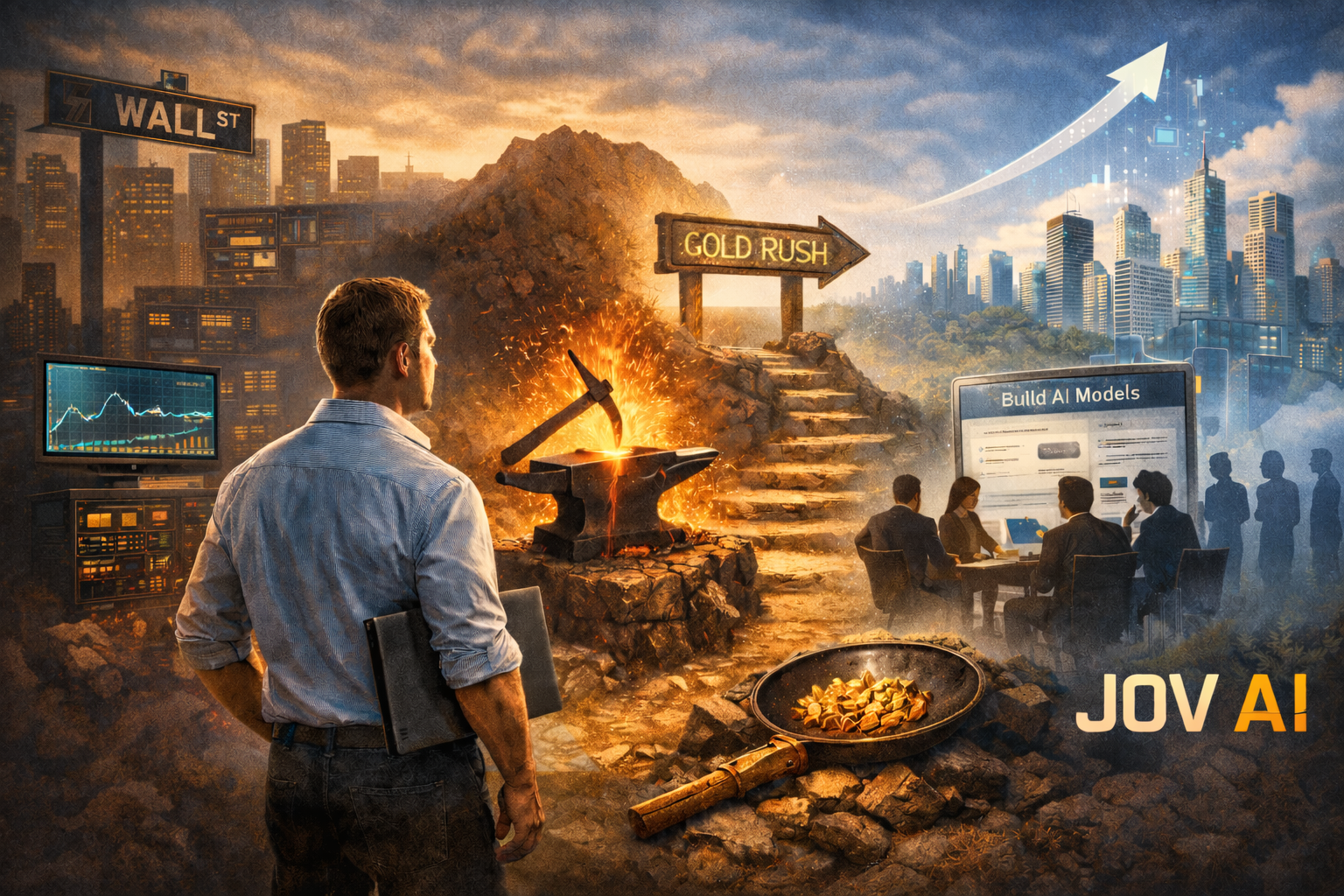
In 2022, I walked away from a 15-year career in bond trading to build AI models. I thought I knew exactly how this would play out.
I was right about the opportunity. I was wrong about the timeline.
That gap between promise and payoff is the real story, and it's the reason most small businesses still haven't figured out how to make AI work for them.
The Trading Models That Taught Me the Hard Lesson#
I formed Brainacity with partners. We brought in Positronic AI to build deep learning models for trading financial instruments. We ran fast experiments across multiple prediction intervals.
We had the data, we had the team, and we had the runway to execute. I thought we'd deploy the models and print money.
Instead, I learned a harder lesson: building machine learning models is one thing. Monetizing them is another game entirely, one that takes longer than anyone wants to admit.
Brainacity is a long game. The work continues. But the experience opened my eyes to a different opportunity.
The Gold Rush Insight and the LIT Pivot#
Ben Vierck, Founder of Positronic AI, framed it as a Gold Rush problem: the money was in the pickaxes, not the gold. All along, his team had been forging those pickaxes, automating the grunt work, building in guardrails that made it hard to fail.
He had the technological knowhow. I had the hard-won perspective to recognize it, and the conviction to act. My partners and I invested, giving the team the fuel they needed to bring LIT to market: a SaaS platform that lets people create deep learning models without programming.
Then, in November 2022, ChatGPT was released, and suddenly everyone was talking about AI.
For the next two years, I immersed myself, testing every tool I could find and applying them to Brainacity and anywhere else I got the chance.
The Forum Moment: Why SMBs Feel Stuck#
Then something crystallized at a Business Ethics Forum at the University of Dallas in November 2024.
The topic was "AI as an Employee." We discussed the ethical ramifications of Lattice, a company that had tried giving AI bots official employee records.
The room was full of sharp people: lawyers, professors, business owners.
I'd spent two years deep in AI, testing tools, building workflows, seeing what actually worked.
In a room full of experts in other fields, I realized I'd become an expert in this one.
Afterward, a few of them pulled me aside.
"I know I need AI, but I have no idea where to begin."
I called Ben. "Everyone there had heard of ChatGPT," I told him. "But almost nobody knew what to actually do with it."
That was the epiphany: stop leading with technology. Start with real problems that need solving right now.
From Tools to Problems#
Months later, I met a friend for coffee, a business consultant.
I started laying out my grand vision: go into companies, map every department, build full AI roadmaps with ROI projections and implementation timelines and change management frameworks...
He cut me off. "Just ask them what their biggest pain point is."
"Okay," I said. "What's your biggest pain point?"
"I need a bigger funnel."
So I helped him build a LinkedIn outreach workflow. We used readily available tools, nothing exotic. Over the following months, he grew his pipeline significantly, with response rates over 20 percent, which is strong for cold outreach.
It wasn't a neural net. But it solved a real problem.
That's when everything clicked. I launched JOV AI in early 2025 to help SMBs automate their operations.
What I've Learned About Making AI Work#
After years in the trenches, here is what I know to be true:
The gap isn't capability, it's understanding. AI tools are powerful. The bottleneck is knowing how to apply them. The value is translating possibility into action.
Start with the pain, not the technology. "What's your biggest bottleneck?" works. Most wins start with a specific frustration, not a capability showcase. Much of what we do is simple code automation rather than complex AI, and that is exactly what is needed.
SMBs can move faster than enterprises. Fortune 500 companies are spending millions on AI and struggling to see ROI. Organizational complexity slows everything down. A 50-person company can implement in weeks what takes an enterprise years. That is not a limitation. That is an advantage.
If you're unsure where to start, pick one weekly bottleneck that costs five or more hours, write the steps on a page, and automate one handoff. Then measure the time you get back.
Here's what I couldn't see until I'd tried everything else:
Tools alone didn't move the needle.
Dashboards didn't change behavior.
Prompt training didn't stick.
What worked was building systems that think alongside you, not apps you have to learn.
Where JOV AI Is Headed#
I'm building a team. I stay immersed in the market, testing tools, talking to customers, understanding their problems.
Ben Vierck leads our engineering, going deep on the technology to build what people actually need.
Cole Lysaught, Founder of Partner Equity, joined as an investor and strategic partner. He believed in the vision and is opening doors and shaping our go-to-market.
That's JOV AI.
We're building toward a future where solo entrepreneurs compete with agencies, where SMBs punch above their weight, where the playing field actually levels.
I don't have it all figured out. The AI landscape shifts every few months. But after 4 years of building models, pivoting strategies, and watching sharp people hesitate because they didn't know where to start, I know one thing for certain:
The barrier isn't technology. It's the path from technology to results.
If you're still 'playing with AI' and it hasn't taken real work off your plate, it's not a mindset issue, it's an implementation gap.
That's the work we're doing at JOV AI: implementation, not hype. If you want help building that path, reach out for a discovery call.