The AI Advantage Isn't About Which Model You Pick. It's How You Run It.#
Every few months, a new AI model drops and the internet loses its mind. GPT-5-whatever. Gemini-some-number. The next thing.
It's like the iPhone when they were new—each number was a big deal. I used to get excited too. But can you honestly tell me the kid fresh out of college is getting more ROI out of a new iPhone than the business operator on one that's three years old?
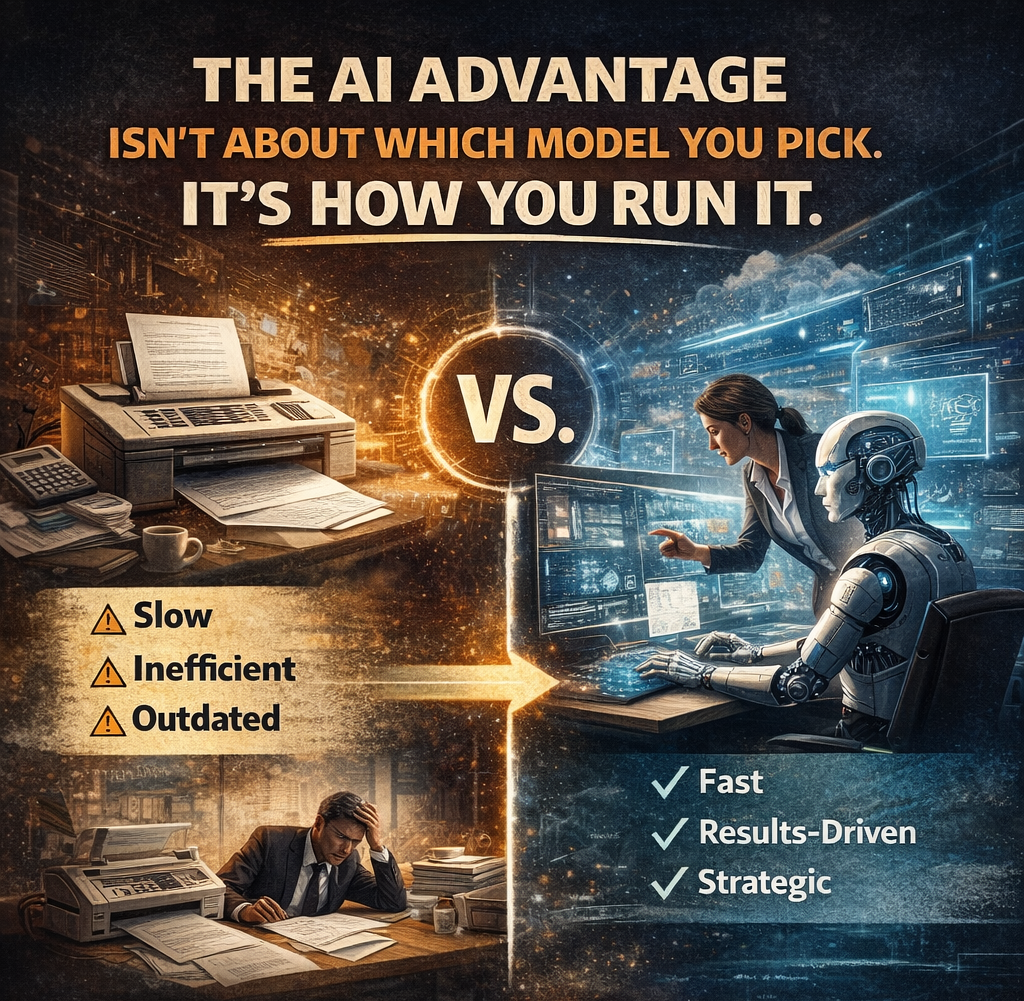
Now, look at the guy who doesn't have a cell phone and is still faxing documents—how's he doing?
That's what I mean. Debating which AI model to use is like worrying about which carrier to get cell service through. Meanwhile, most business owners haven't figured out what to do with the last model.
Here's what's easy to miss in the noise: the models got good. Really good. Three years ago, AI couldn't write a decent email. Now it can draft proposals, analyze contracts, and handle first-line customer support. Small and medium-sized businesses have access to the same capabilities enterprise companies are spending millions to deploy.
So why are some businesses pulling ahead while others spin their wheels?
It's not which AI they picked. It's how they run it.
Your Superpower: Speed#
Here's something the big consulting firms won't tell you directly: enterprises are slow.
Fortune 500 companies are spending millions on AI. They're also spending months in AI strategy committees, alignment meetings, change management programs, and pilot approvals. By the time they deploy anything, the landscape has shifted.
You don't have that problem.
You can spot a bottleneck Monday morning and have AI handling it by lunch. No steering committee. No six-month roadmap. No death by PowerPoint.
That's not a limitation of being smaller. That's a structural advantage.
BCG found that only 5% of companies are generating real value from AI. The rest are stuck in pilots and experiments. The 5% moved fast. They didn't wait for perfect conditions. They picked a problem, built a system, measured the results, and iterated.
You can do that in a week. They need a quarter.
82% of enterprise decision-makers now use AI weekly. But using it and getting value from it are different things. Most are still figuring out how to operationalize it. While they strategize, you can execute.
The Execution Gap#
Most people treat AI like a magic 8-ball. Ask a question, hope for a good answer, move on.
That's not how the winners use it.
Winners treat AI like an employee. They give it context. They give it instructions. They give it a specific job to do, with clear inputs and expected outputs.
The magic 8-ball approach:
Help me write a proposal.
The employee approach:
Here's our service offering, our pricing structure, and three previous proposals that closed. Here's what this prospect told us on the discovery call. Draft a proposal that addresses their specific pain points and positions our solution against their current process.
Same AI. Completely different output.
The gap isn't prompting skills. It's process. Are you asking AI for help, or assigning it a job? The difference is knowing how to set up the system so AI produces reliable work every time—not occasional flashes of usefulness.
This is what separates "playing with AI" from "running your business on AI."
At JOV AI, every workflow we build starts with this question: what does the AI need to know to do this job well? The answer becomes the system. The prompt is just the last step.
Protect the Asset#
Once AI starts producing real value, protect it.
I'm not talking about compliance frameworks or governance committees. I'm talking about common sense.
You wouldn't publish your client list on a billboard. Don't paste it into a free AI tool with no data policy. You wouldn't email your pricing strategy to a stranger. Don't feed it into a system you don't control.
If you're building workflows that give you a competitive advantage, treat them like assets:
- Know what data goes in. Some AI tools train on your inputs. Others don't. Know the difference.
- Own the outputs. If AI helps you create something valuable, make sure you have the rights to it.
- Set the rules for your team. What can they use AI for? What's off-limits? One page of clear guidelines beats a hundred pages nobody reads.
Good rules make people more confident, not less. Your team should know exactly when to trust AI and when to apply their own judgment. That clarity is what lets them move fast without breaking things.
Stop Shopping. Start Building.#
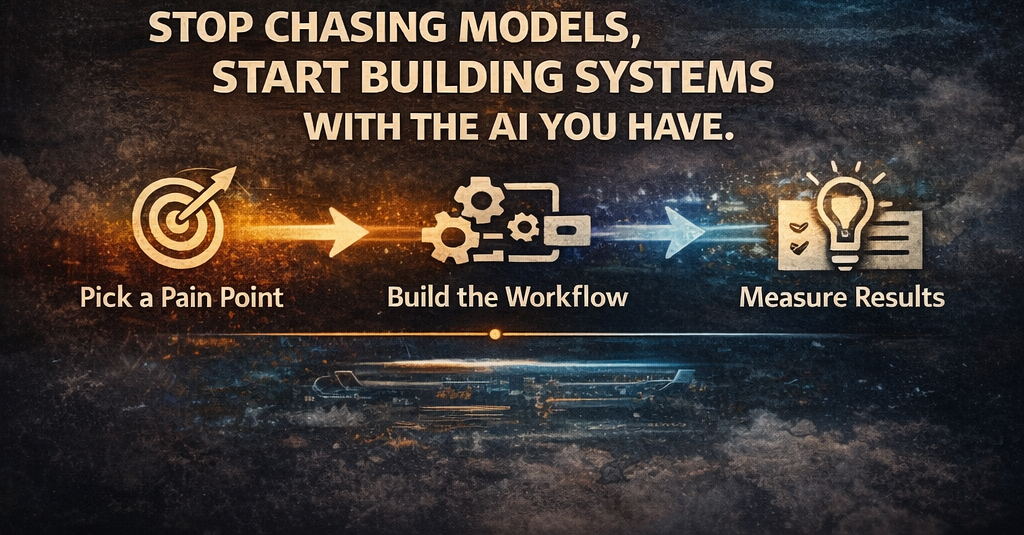
The model decision takes five minutes. The system design takes longer—but that's where the value is.
Stop asking which AI to use. Start asking:
- What's one task that eats hours every week?
- What would AI need to know to handle it reliably?
- How do I measure whether it's actually working?
Answer those three questions and you're ahead of most businesses still debating ChatGPT versus Claude.
The companies pulling ahead aren't using better AI. They're running it better. They've built the machine.
You can build yours. If you want a second set of eyes on your first workflow, we're here.